Activism Through Protest
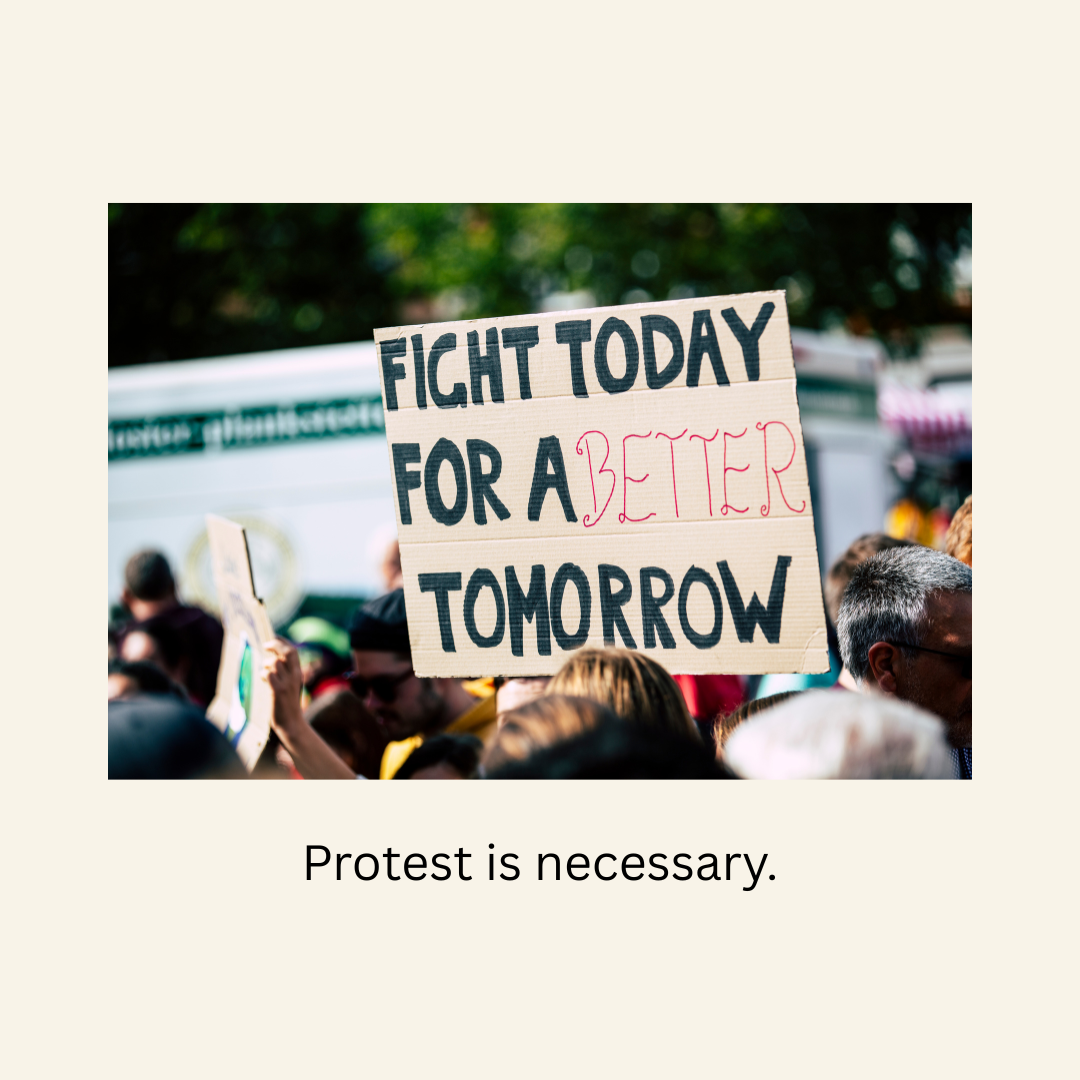
Protest is one way communities make their refusal visible, but it is not enough on its own.
James Baldwin reminds us that “Not everything that is faced can be changed, but nothing can be changed until it is faced.” Protest is how communities force what has been ignored, denied, or normalized into public view. It creates confrontation with harm. It interrupts silence. It demands that reality be faced.
At Threadwork, we understand protest as a catalyst rather than a conclusion. Protest generates urgency, energy, and collective momentum. It brings people into motion and signals that the status quo is no longer acceptable. But protest only becomes powerful when it is integrated with the deeper work of art, education, and community building.
Without shared understanding, relational grounding, and clear pathways for participation, protest risks becoming episodic and exhausting. Energy flares and fades. People show up, but nothing is built to hold what follows. Resistance without construction leaves communities stuck in cycles of reaction.
We engage protest as an entry point into active work. It is where people find one another, name what must change, and feel the force of collective conviction. From there, protest must be met with education that builds critical understanding, community that sustains relationships, and art and story that help movements remember why they began.
This is where protest becomes powerful. Not as a moment, but as a force that energizes and catalyzes tangible change. Protest opens space. The work fills it.
At Threadwork, protest is inseparable from building. It is one thread in a larger fabric of collective action that turns refusal into creation and urgency into lasting transformation.
We support direct actions that demand accountability, safety, and justice for all. We show up in solidarity and amplify calls for systemic change.
James Baldwin reminds us that “Not everything that is faced can be changed, but nothing can be changed until it is faced.” Protest is how communities force what has been ignored, denied, or normalized into public view. It creates confrontation with harm. It interrupts silence. It demands that reality be faced.
At Threadwork, we understand protest as a catalyst rather than a conclusion. Protest generates urgency, energy, and collective momentum. It brings people into motion and signals that the status quo is no longer acceptable. But protest only becomes powerful when it is integrated with the deeper work of art, education, and community building.
Without shared understanding, relational grounding, and clear pathways for participation, protest risks becoming episodic and exhausting. Energy flares and fades. People show up, but nothing is built to hold what follows. Resistance without construction leaves communities stuck in cycles of reaction.
We engage protest as an entry point into active work. It is where people find one another, name what must change, and feel the force of collective conviction. From there, protest must be met with education that builds critical understanding, community that sustains relationships, and art and story that help movements remember why they began.
This is where protest becomes powerful. Not as a moment, but as a force that energizes and catalyzes tangible change. Protest opens space. The work fills it.
At Threadwork, protest is inseparable from building. It is one thread in a larger fabric of collective action that turns refusal into creation and urgency into lasting transformation.
We support direct actions that demand accountability, safety, and justice for all. We show up in solidarity and amplify calls for systemic change.